


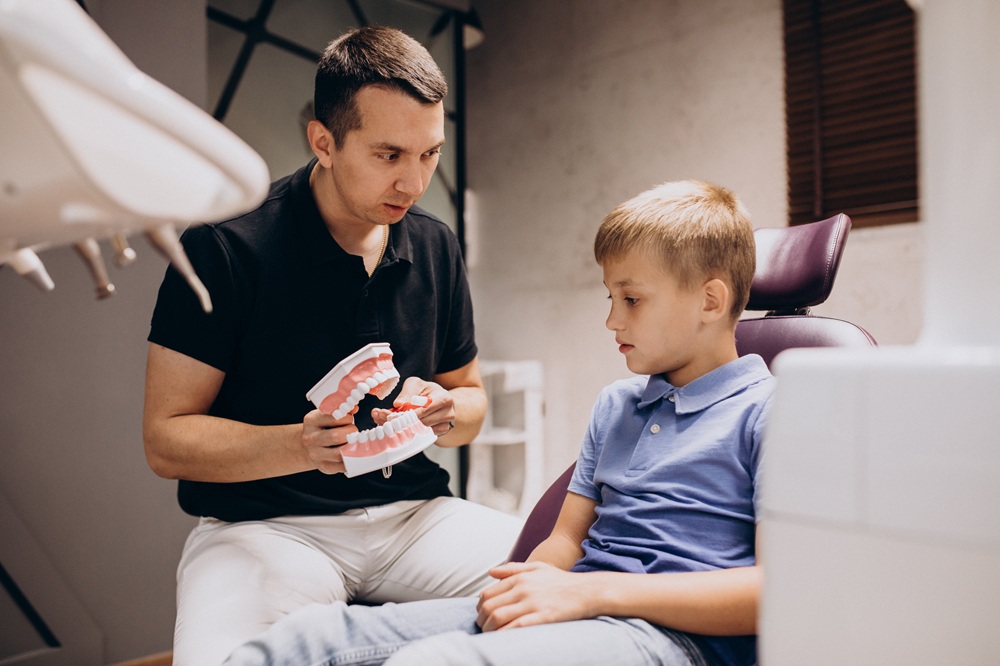
Children’s teeth can face several common problems as they grow, from cavities and gum irritation to chipped teeth and changes in tooth development. Some concerns may be easy to notice, while others can develop without causing clear symptoms at first. A children’s dentist can examine your child’s teeth and gums, monitor changes as the permanent teeth come in, and identify concerns that may need attention. Regular dental visits, along with good brushing and healthy daily habits, can help support your child’s oral health through each stage of development.
What Are the Most Common Dental Problems in Children?
Common dental problems in children include cavities, gum problems, tooth injuries, and issues with how their teeth grow. Some problems may be linked to food choices and brushing habits, while others can happen because of accidents, habits, or normal tooth development.
Common concerns include:
- Cavities and tooth decay
- Swollen or irritated gums
- Chipped or injured teeth
- Tooth sensitivity
- Baby teeth falling out too early.
- Teeth that do not grow in the right position
- Thumb-sucking or frequent pacifier use
Knowing these common problems can help you notice changes early and seek dental care when your child needs it.
Why Are Cavities Common in Children?
Cavities happen when bacteria in the mouth make acids that damage the teeth. Eating sugary foods and drinks often, not brushing well, and having too much plaque can increase the chance of tooth decay.
Children may not always notice a cavity in its early stages. As decay progresses, you may notice:
- Toothache
- Sensitivity to hot or cold foods
- Pain while chewing
- White, brown, or dark spots on a tooth
- A visible hole or damaged area
A dentist near you can examine your child’s teeth and determine whether a cavity or another dental concern is present.
Can Children Develop Gum Problems?
Yes. Children can develop gum inflammation when plaque builds up along the gumline. Gums may look red, swollen, or bleed during brushing.
Good daily care can help lower the amount of plaque around the teeth. Encourage your child to:
- Brush twice a day
- Clean between the teeth as recommended.
- Limit frequent sugary snacks and drinks.
- Visit a dental professional regularly.
If gum bleeding or swelling continues, a dental assessment can help identify the cause.
What Happens If a Child Chips or Injures a Tooth?
Falls, sports injuries, and accidents can damage a child’s teeth. A tooth may become chipped, cracked, loose, or displaced after an injury.
After a dental injury, look for:
- A broken or chipped tooth
- Bleeding around the tooth
- Swelling
- Pain or sensitivity
- A tooth that has become loose
- A change in the tooth’s position
An assessment at a dental clinic in Red Deer can help determine the extent of the injury and whether treatment is needed.
Can Tooth Alignment Become a Problem?
As children grow, their jaws and teeth continue to develop. Sometimes teeth may become crowded, overlap, or appear out of position. The way the upper and lower teeth come together may also need to be monitored.
A dental professional can observe these changes during regular visits and advise you if further assessment may be helpful.
Early observation does not always mean treatment is needed. It simply allows changes in your child’s developing smile to be monitored over time.
How Can Baby Teeth Cause Dental Concerns?
Baby teeth do not last forever, but they are still important. They help children chew food, speak clearly, and keep space for their adult teeth to come in properly.
Problems such as severe decay or an early loss of a baby tooth can affect these functions. If a baby tooth becomes badly damaged, painful, or infected, a children’s dentist in Red Deer can assess it and explain the available treatment options.
Give Your Child’s Smile a Healthy Start!
Your child’s teeth change quickly during the growing years, making regular dental care an important part of keeping track of their oral health. A dental visit can help identify concerns early and provide practical guidance on brushing, eating habits, and caring for developing teeth.
Book an appointment with Piper Creek Dental Choice to check your child’s teeth and gums and get personalized guidance for their changing dental needs.
FAQs
Should a baby tooth be treated if it will eventually fall out?
Yes, when treatment is needed. Baby teeth can affect chewing, speech, and the space available for permanent teeth, so problems should not automatically be ignored.
Why do my child’s gums bleed when brushing?
Bleeding can occur when plaque causes gum inflammation. If bleeding continues despite good brushing, a dental assessment can help identify the cause.
What should you do if your child chips a tooth?
Arrange a dental assessment, particularly if there is pain, bleeding, swelling, or significant damage. Keep any broken tooth piece if possible and follow the dental professional’s instructions.
When should a child start regular dental visits?
Dental visits should begin early in childhood, rather than waiting until a problem develops. Regular appointments allow the teeth and gums to be checked as your child grows.