


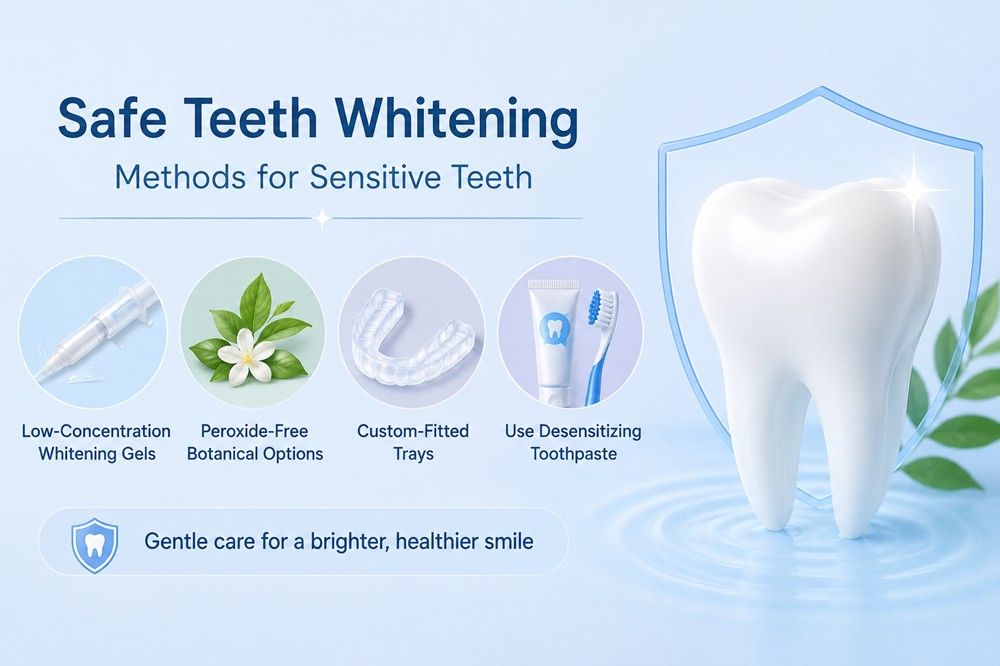
Brightening your smile shouldn’t have to come with a side of sharp pain. Many people avoid whitening treatments because they worry about tooth sensitivity, which feels like a sudden “zing” when you drink cold water or eat something sweet. If you are searching for teeth whitening near you, it is important to know that you have options that are both effective and gentle on your enamel.
Understanding Tooth Sensitivity
Sensitivity happens when the outer layer of your teeth, called enamel, becomes thin. This exposes the dentin underneath. Dentin has tiny tubes that lead straight to the nerves of your teeth. When whitening chemicals are too strong, they travel through these tubes and irritate the nerves.
Why Traditional Whitening Can Hurt
Most standard whitening products use high concentrations of hydrogen peroxide. While this is great for removing deep stains, it can be harsh. For people with sensitive smiles, these strong formulas can cause temporary discomfort or “reversals” where the teeth feel sore for several days.
Safe Professional Whitening Options
When you visit a dental clinic in Red Deer, you can access professional-grade treatments designed for sensitive mouths. Dentists use specific techniques to keep you comfortable:
- Desensitizing Gels: These are applied before or after the treatment to block pain signals.
- Custom-Fitted Trays: These ensure the whitening gel stays on your teeth and off your sensitive gums.
- Lower Concentrations: Professionals can use a milder gel that takes slightly longer but prevents pain.
At-Home Methods for Sensitive Teeth
If you prefer to whiten your teeth at home, you must be careful about the products you choose. Look for items specifically labelled for sensitivity.
- Whitening Toothpaste: These use mild abrasives rather than bleach to remove surface stains.
- LED Light Kits: Some modern kits use light technology to speed up the process so the chemicals don’t have to sit on your teeth for as long.
- Sensodyne-Based Whitening: Using a sensitivity toothpaste for two weeks before you start whitening can help build up a protective barrier.
Comparison of Whitening Methods
| Method | Best For | Sensitivity Level |
| Professional In-Clinic | Deep stains and fast results | Moderate (with prep) |
| Custom Take-Home Trays | Long-term brightness | Low to Moderate |
| Whitening Strips | Minor touch-ups | High (if not sensitive-rated) |
| Whitening Toothpaste | Daily maintenance | Very Low |
Natural Ways to Maintain a Bright Smile
You don’t always need chemicals to keep your teeth looking great. Simple habits can prevent new stains from forming:
- Rinse with water after drinking coffee, tea, or red wine.
- Drink through a straw to keep dark liquids away from your front teeth.
- Eat “crunchy” fruits and vegetables like apples and carrots, which naturally scrub the teeth.
Finding a dental clinic near you that understands your comfort needs is the first step toward a more confident look. They can evaluate your oral health to ensure you don’t have any underlying issues, like cavities or gum recession, that might make whitening more painful than it should be.
Achieving Your Brightest Smile
Sensitive teeth whitening takes time, as you would expect. A weak treatment over two weeks is better than a strong one in one hour – this is true in many natural fabrications. With the right products and professional advice, you can have a smile to die for without discomfort.
Conclusion
If you are ready to enhance your smile without the worry of pain, our team is here to help. We prioritize your comfort and use methods that protect your enamel while delivering beautiful results. To find the best whitening plan for your unique needs, please book an appointment with Piper Creek Dental Choice today.
Frequently Asked Questions
Why do my teeth feel sensitive after I use whitening strips at home?
Whitening strips often contain high peroxide levels that penetrate the enamel and irritate the internal nerves of your teeth.
How long does the sensitivity usually last after a treatment?
Most people find that any discomfort fades within 24 to 48 hours after they finish the whitening process.
Can I whiten my teeth if I have receding gums?
Yes, but you should have a dentist apply a protective barrier to the exposed roots to prevent severe pain.
Is charcoal toothpaste a safe way to whiten sensitive teeth?
No, charcoal is often too abrasive and can wear down your enamel, which actually makes sensitivity much worse over time.
How often can I safely whiten my sensitive teeth?
It is best to wait at least six months to a year between full treatments to protect your enamel.